https://dx.doi.org/10.24016/2026.v12.539
ORIGINAL ARTICLE
Influence of intrafamily and child-to-parent violence on the mental health of adolescents in the Peruvian amazon: the mediating role of empathy
Esther Villanueva Barboza 1*, Ronald Gianmarco Silva Fernandez 1
1 Universidad Peruana Unión, Tarapoto, Peru.
* Correspondence: esthervillanueva@upeu.edu.pe
Received: March 30, 2026 | Revised: May 04, 2026 | Accepted: May 28, 2026 | Published Online: August 20, 2026.
CITE IT AS:
Villanueva Barboza, E., Silva Fernandez, R. G. (2026). Influence of intrafamily and child-to-parent violence on the mental health of adolescents in the Peruvian amazon: the mediating role of empathy. Interacciones, 12, e539. https://doi.org/10.24016/2026.v12.539
ABSTRACT
Background: Intrafamily violence is a major risk factor for adolescent mental health, particularly in socially vulnerable contexts. However, the socioemotional mechanisms linking family violence to psychological well-being remain insufficiently understood, especially in Amazonian populations.
Objective: This study examined the effects of intrafamily violence and child-to-parent violence on empathy and mental health among adolescents from the Peruvian Amazon, with a particular focus on the mediating role of empathy.
Methods: A cross-sectional study was conducted with 364 adolescents aged 11 to 17 years from a public school in Tarapoto, Peru. Participants completed the Scale of Child-to-Parent Violence and Intrafamily Violence, the Revised Mental Health Inventory-5, and the Brief Basic Empathy Scale. Structural equation modeling was used to test the hypothesized relationships among family violence, empathy, and mental health.
Results: The proposed model showed an adequate fit to the data. Child-to-parent violence was negatively associated with mental health (β = −.11, p = .04). Intrafamily violence was positively associated with empathy (β = .18, p = .01) and negatively associated with mental health (β = −.28, p = .02). Empathy was also negatively associated with mental health (β = −.40, p = .01). Mediation analysis showed a significant indirect effect of intrafamily violence on mental health through empathy (β = −.071, p = .028, 95% CI [−.044, −.003]), whereas the indirect effect of child-to-parent violence was not significant. The model explained 30% of the variance in mental health.
Conclusion: Intrafamily and child-to-parent violence were associated with poorer mental health among adolescents from the Peruvian Amazon, although through partially distinct pathways. Empathy partially mediated the relationship between intrafamily violence and mental health, suggesting that in contexts of family adversity, heightened empathic sensitivity may operate less as a protective factor and more as a mechanism of emotional vulnerability. These findings underscore the need for school-based mental health interventions that address family violence, emotional regulation, and empathic distress in Amazonian adolescents.
Keywords: intrafamily violence; child-to-parent violence; empathy; mental health; adolescents; Peruvian Amazon.
INTRODUCTION
Adolescence is a highly sensitive period for the development of mental health due to the profound neurobiological, emotional, and social changes that occur during this stage (Grace GA & Sujitha P, 2023; Ladouceur, 2012). Indeed, evidence has shown that continuous exposure to adverse contexts during adolescence significantly increases the risk of internalizing symptoms, emotional dysregulation, and psychological disorders in early adulthood (Marques de Miranda et al., 2020). Globally, approximately one in seven adolescents experience a mental disorder, with anxiety, depression, and behavioral problems being the most prevalent conditions (World Health Organization, 2024). In Peru, reports indicate a concerning trend; specifically, in the San Martín region, it is estimated that more than 20.7% of individuals older than 12 years are affected by at least one mental health disorder (Gobierno Regional San Martín, 2025). This scenario reflects that mental health is closely linked to structural and social determinants, such as poverty, family violence, and limited access to specialized services, conditions that persist across various contexts in the Peruvian Amazon (Instituto Nacional de Salud Mental Honorio Delgado, 2025).
Although numerous studies have shown that family violence is one of the main predictors of adolescent psychopathology, the understanding of the psychological mechanisms through which it affects mental health remains limited, particularly in Latin American and Amazonian populations. Most research has focused on the direct effects between violence and psychological symptoms, leaving the role of socioemotional variables relatively unexplored, despite their potential to explain how violent experiences are internalized and ultimately impact adolescents’ emotional well-being (Miliauskas et al., 2022).
In this context, intrafamilial violence constitutes a particularly harmful experience because it occurs within the primary environment of socialization and attachment. This type of violence includes physical, psychological, or emotional behaviors perpetrated among family members, which undermine emotional security and affect the way family members relate to one another (Magalhães et al., 2017). Repeated exposure to violent family dynamics increases emotional insecurity, disrupts emotional regulation abilities, and contributes to the development of anxiety symptoms, depression, and persistent psychological distress among adolescents (Liel et al., 2022; Zhang et al., 2020). Likewise, recent systematic reviews have reported that exposure to different forms of interpersonal violence is strongly associated with internalizing symptoms and impaired mental health among adolescents, particularly in socially vulnerable contexts (Miliauskas et al., 2022).
At the same time, child-to-parent violence has emerged as a growing problem within contemporary family dynamics. This form of violence includes repeated acts of physical, psychological, or economic aggression perpetrated by children against their parents or caregivers (Ibabe, 2020). Recent studies indicate that adolescents who engage in this type of violence often have a history of victimization themselves, early exposure to domestic violence, and elevated levels of emotional and behavioral maladjustment (Burgos-Benavides et al., 2024; Seijo et al., 2020). From an ecological and transgenerational perspective, violence within the family system is not an isolated phenomenon, but rather a relational pattern that tends to be repeated through processes of adaptation to coercive environments and emotional learning (Rogers, 2022; Whiting et al., 2020).
However, the relationship between family violence and adolescents’ mental health does not appear to be exclusively direct. Recent studies suggest that certain socioemotional processes related to interpersonal sensitivity and emotional processing may mediate this association. Among these processes, empathy has received increasing attention due to its fundamental role in social relationships and in the regulation of emotional responses (Guo et al., 2024).
Traditionally, empathy has been defined as a protective capacity associated with prosocial behavior, social cohesion, and psychological adjustment. However, current evidence suggests that its impact on mental health depends on the way it is developed and regulated. Empathy comprises both a cognitive dimension, related to the ability to understand others’ emotional states, and an affective dimension, referring to the tendency to emotionally share the experiences of others (Jolliffe & Murray, 2012). Although both dimensions are generally associated with better interpersonal relationships, recent studies have shown that high levels of affective empathy may increase emotional overload, interpersonal hypervigilance, and psychological distress, particularly in contexts of violence or chronic stress (Huang et al., 2025).
From this perspective, adolescents exposed to family violence may develop heightened sensitivity to others’ emotions and affective cues as an adaptive survival mechanism within unpredictable or threatening environments. In other words, continuous exposure to violent dynamics may foster a hypersensitive form of empathy aimed at anticipating conflicts and reducing threats in interpersonal relationships. However, this sustained emotional hyperactivation may also increase psychological vulnerability and impair mental health. This interpretation is consistent with attachment and trauma adaptation models, which propose that insecure family environments alter the way adolescents process emotions and respond at the socioaffective level (Costa Martins et al., 2021).
Despite these advances, literature presents important inconsistencies. While some studies suggest that violence is associated with low empathy and aggressive behaviors, others indicate that certain forms of victimization may increase emotional sensitivity and affective empathy, particularly among adolescents who are chronically exposed to family conflict (Lovett & Sheffield, 2007). These contradictions highlight that empathy does not necessarily function as a protective resource in all cases, but rather as a complex process whose impact depends on the relational environment and the type of adverse experience encountered.
Furthermore, studies integrating intrafamilial violence, child-to-parent violence, empathy, and mental health remain scarce, particularly in Latin American and Amazonian contexts. This gap is especially relevant because school adolescents from the Peruvian Amazon face specific conditions of social vulnerability, exposure to violence, multidimensional poverty, limited access to mental health services, and highly stressful family dynamics factors that may intensify the psychological impact of violence and disrupt socioemotional development. Despite this, empirical evidence from Amazonian contexts remains limited.
Based on this theoretical framework, the following hypotheses were formulated:
· H1: Child-to-parent violence has a negative effect on the mental health of adolescents from the Peruvian Amazon.
· H2: Child-to-parent violence has a positive effect on empathy among adolescents from the Peruvian Amazon.
· H3: Intrafamilial violence has a positive effect on empathy among adolescents from the Peruvian Amazon.
· H4: Intrafamilial violence has a negative effect on the mental health of adolescents from the Peruvian Amazon.
· H5: Empathy mediates the relationship between intrafamilial and child-to-parent violence and mental health among adolescents from the Peruvian Amazon.
METHODS
Design
It is a non-experimental, quantitative, associative, and cross-sectional explanatory study, as it aims to analyze the relationships among latent variables through a structural equation modeling approach (Ato et al., 2013).
Participants
A non-probability sampling method was used to select the participants. The inclusion criteria were: (a) being enrolled in the academic semester, (b) obtaining prior parental authorization through informed consent, (c) voluntarily agreeing to participate through informed assent, and (d) living with both parents, this inclusion criterion was considered because the study sought to analyze the dynamics of intrafamilial and child-to-parent violence within two-parent family systems, in order to maintain a certain degree of structural homogeneity in the sample and reduce potential confounding variables associated with diverse family. The exclusion criteria were: (a) failure to complete all sociodemographic information and questionnaires, (b) not being within the corresponding age range, and (c) being physically ill.
The sample consisted of 364 students from a public school in Tarapoto, aged between 11 and 17 years (M = 13.5, SD = 1.10). Of these, 186 were male (51.1%), 135 were in first grade (37.1%), 128 identified as Catholic (35.2%), 328 were not only children (90.1%), 264 had not received and were not currently receiving psychological treatment (72.5%), and 303 lived with their father, mother, and siblings (83.2%) (Table 1).
Table 1. Characteristics of the participants (n=364).
|
Characteristics |
Categories |
Frequency |
% |
|
Gender |
Female |
178 |
48.9 % |
|
|
Male |
186 |
51.1 % |
|
Religious Affiliation |
Adventist |
42 |
11.5 % |
|
Catholic |
128 |
35.2 % |
|
|
Evangelical |
77 |
21.2 % |
|
|
|
Other |
117 |
32.1 % |
|
¿Are you an only child?? |
Yes |
36 |
9.9 % |
|
|
No |
328 |
90.1 % |
|
Received psychological treatment? |
Yes |
100 |
27.5 % |
|
|
No |
264 |
72.5 % |
|
¿Who do you live with? |
Father y mother |
61 |
16.8 % |
|
|
Father, mother and brother |
303 |
83.2 % |
Instruments
Scale of CPV and Intrafamily Violence [(Ibabe & Jaureguizar, 2011), Peruvian version (Villarreal-Zegarra et al., 2023)]. The aim of this scale is to assess child-to-parent violence and intrafamilial violence in adolescents aged between 11 and 17 years. It consists of 9 items grouped into three first-order factors: psychological violence (items 1 and 2), physical violence (items 3 and 4), and emotional violence (items 5 and 6). The second factor assesses family violence (items 7, 8, and 9). Items are rated on a 5-point Likert scale ranging from 1 (never) to 5 (very often): never = 1, almost never = 2, sometimes = 3, often = 4, and very often = 5. The scale has demonstrated evidence of reliability for each factor: psychological violence (ω = .91), physical violence (ω = .82), emotional violence (ω = .89), and intrafamilial violence (ω = .76). It also showed evidence of validity, with adequate fit indices (CFI = .991; RMSEA = .053).
Revised Mental Health Inventory-5 (R-MHI-5) (Berwick et al., 1991), Peruvian version (Rojas-Mendoza et al., 2024). The purpose of this scale is to assess mental health in adolescents aged between 12 and 17 years. It consists of 5 items grouped into two factors: psychological well-being (items 1 and 2) and psychological distress (items 1, 3, and 5). Items are rated on a 4-point Likert scale ranging from 0 (never) to 3 (always): never = 0, sometimes = 1, several times = 2, and always = 3. The scale has demonstrated evidence of reliability for its factors: psychological well-being (ω = .88) and psychological distress (ω = .79). It also showed evidence of validity, with adequate fit indices (CFI = .99; TLI = .99; SRMR = .04; RMSEA = .101).
Basic Empathy Scale-Brief Version (BES) (Oliva Delgado et al., 2011), Peruvian version (Ventura-León et al., 2019). The purpose of this scale is to assess empathy in adolescents aged between 11 and 18 years. It consists of 9 items grouped into two factors: affective empathy (items 1, 2, 3, and 6) and cognitive empathy (items 4, 5, 7, 8, and 9). Items are rated on a 5-point Likert scale: 1 = strongly disagree, 2 = disagree, 3 = neither agree nor disagree, 4 = agree, and 5 = strongly agree. The scale has demonstrated evidence of reliability for its factors: affective empathy (ω = .79) and cognitive empathy (ω = .77). It also showed evidence of validity, with adequate fit indices (CFI = .95; SRMR = .06; RMSEA = .06).
Analysis plan
Descriptive analyses were conducted using absolute and relative frequencies for categorical variables. Measures including mean, standard deviation, kurtosis, and skewness were calculated to assess data normality. Pearson’s correlation coefficient was used to analyze the relationships among the study variables. The study model was analyzed using structural equation modeling (SEM) with the MLR estimator, which is appropriate for numerical variables and robust to deviations from inferential normality (Muthén & Muthén, 2017). Model fit was evaluated using the CFI, RMSEA, and SRMR fit indices, considering the established criteria of CFI > .90 and RMSEA and SRMR < .08. Reliability was assessed using the internal consistency alpha (α) method.
Ethical aspects
Before the study began, approval and authorization were obtained from the Research Ethics Committee of the Universidad Peruana Unión through Resolution N°. 0425-T-2025/UPeU-FCS-CF, in accordance with the principles of the (World Medical Association Declaration of Helsinki, 2013). To conduct data collection, formal authorization was first requested and obtained from a public educational institution in the city of Tarapoto. Subsequently, the questionnaires were prepared in printed format and preceded by an informed consent form addressed to the parents or legal guardians of the students. This document detailed the objectives of the study, the procedures to be followed, the instruments to be used, the voluntary nature of participation, as well as guarantees of confidentiality, anonymity, and the right to withdraw from the study at any time without repercussions. Additionally, an informed assent form was provided to the adolescent participants to ensure their understanding of the nature of the study and to obtain their free and voluntary agreement to participate. Data collection was conducted face-to-face in the school classrooms. The researchers personally distributed the printed questionnaires to the students and remained present throughout the administration process to provide guidance, answer potential questions, and supervise compliance with the instructions. Once completed, the questionnaires were collected and stored in a secure location to preserve the confidentiality and security of the information gathered.
RESULTS
Table 2 presents the descriptive statistics of the study variables. Psychological well-being showed the lowest mean score (M = 3.4, SD = 1.5), whereas cognitive empathy presented the highest mean score (M = 17.8, SD = 4.6). In addition, the skewness values for all variables were within the acceptable range for normal distribution (±2.0). Internal consistency estimates using Cronbach’s alpha and McDonald’s omega were also observed, with α coefficients ranging from .60 to .80 and ω coefficients ranging from .62 to .80.
Table 2. Descriptive statistics and internal consistency estimate for the study variables.
|
|
M |
SD |
A |
α |
ω |
|
Child-to-parent violence |
7.4 |
2.2 |
1.9 |
0.65 |
0.66 |
|
Intrafamily violence |
5.4 |
2.3 |
1.1 |
0.6 |
0.62 |
|
Affective empathy |
11.3 |
4 |
0.1 |
0.74 |
0.75 |
|
Cognitive empathy |
17.8 |
4.6 |
-0.8 |
0.8 |
0.8 |
|
Psychological well-being |
3.4 |
1.5 |
0 |
0.67 |
0.67 |
|
Psychological distress |
5.6 |
2.1 |
-0.5 |
0.74 |
0.76 |
Note. M = Mean; SD = Standard Deviation; A = Skewness; α = Cronbach’s alpha; ω = McDonald’s omega.
Table 3 presents the correlation results. Child-to-parent violence was positively associated with intrafamilial violence and negatively associated with psychological distress. Likewise, intrafamilial violence showed negative associations with psychological well-being and psychological distress. On the other hand, effective and cognitive empathy demonstrated a moderate positive relationship. In addition, affective empathy was negatively associated with psychological well-being and psychological distress, whereas cognitive empathy was negatively associated with psychological distress. Finally, psychological well-being was positively correlated with psychological distress. However, some non-significant correlations were also observed.
Table 3. Correlations for the study variables
|
|
1 |
2 |
3 |
4 |
5 |
6 |
|
1. Child-to-parent violence |
— |
|||||
|
2. Intrafamily violence |
.15** |
— |
||||
|
3. Affective empathy |
0.05 |
.18*** |
— |
|||
|
4. Cognitive empathy |
-0.02 |
0.01 |
.41*** |
— |
||
|
5. Psychological well-being |
0.01 |
-.23*** |
-.21*** |
0.02 |
— |
|
|
6. Psychological distress |
-.17** |
-.32*** |
-.37*** |
-.21*** |
.43*** |
— |
Note. ** p < .010, *** p < .001.
The analysis of the proposed model showed an acceptable fit: χ²(5) = 22.3, p < .001, CFI = .932, SRMR = .036, and RMSEA = .025. These results support H1, indicating that child-to-parent violence was negatively associated with mental health (β = −.11, p = .04). Likewise, H3 and H4 were supported, showing that intrafamilial violence was positively associated with empathy (β = .18, p = .01) and negatively associated with mental health (β = −.28, p = .02). H5 was also supported, as empathy was negatively associated with mental health (β = −.40, p = .01). In contrast, H2 was not supported, since child-to-parent violence was not significantly associated with empathy (β = .02, p = .689). Furthermore, the model explained 30% of the variance in mental health. The standardized solution is illustrated in Figure 1.
To test the mediation hypothesis, the statistical significance of the indirect effect was estimated using bootstrapping with 5,000 iterations. A significant indirect effect of intrafamilial violence on mental health through empathy was found (β = −.071, p = .028, 95% CI [−.044, −.003]). In contrast, the indirect effect on the case of child-to-parent violence was not statistically significant.
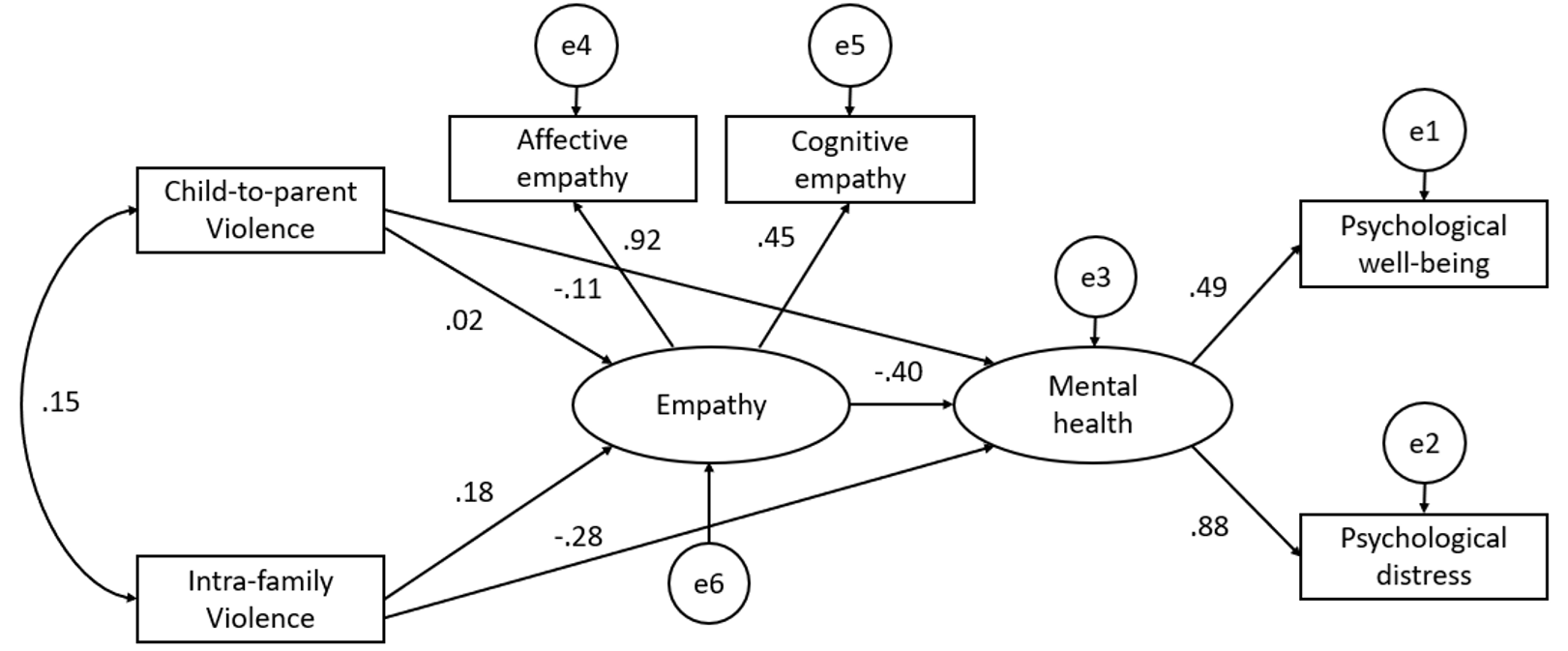
Figure 1. Results of the structural model. Standardized path coefficients are presented.
DISCUSSION
The present study examined the effect of intrafamilial and child-to-parent violence on the mental health of adolescents from the Peruvian Amazon, considering the mediating role of empathy. The findings partially supported the proposed model and suggest that experiences of family violence affect adolescents’ mental health both directly and indirectly through socioemotional processes associated with empathic sensitivity. These results are particularly important given the scarcity of studies conducted in Latin American Amazonian contexts, where social vulnerability, structural inequality, and limited access to mental health services may intensify the psychological impact of family violence.
Regarding the first hypothesis (H1), the results showed that child-to-parent violence was negatively associated with adolescents’ mental health, although the effect size was relatively small (β = −.11). This finding is consistent with previous studies showing that adolescents involved in violent dynamics directed toward their parents tend to experience higher levels of emotional maladjustment, behavioral problems, and psychological impairment (Seijo et al., 2020). From a systemic perspective, child-to-parent violence does not merely constitute an isolated aggressive behavior, but rather reflects family relationships characterized by coercion, conflict, and difficulties in emotional regulation. Nevertheless, the small effect size found suggests that child-to-parent violence likely operates alongside other family and contextual factors not assessed in the present study, such as parenting practices, parental neglect, substance use, or socioeconomic stress. This interpretation is consistent with ecological developmental models, which propose that adolescents’ mental health emerges from the interaction among multiple relational and environmental systems (Mori et al., 2022).
On the other hand, the fourth hypothesis (H4) was confirmed, showing that intrafamilial violence had a stronger negative effect on mental health (β = −.28) compared to child-to-parent violence. This finding strongly supports the international literature identifying chronic exposure to domestic violence as one of the main risk factors for the development of anxiety, depression, traumatic symptoms, and internalizing problems among adolescents (Liel et al., 2022; (Naughton et al., 2020). The greater magnitude of this effect may be explained by the fact that intrafamilial violence directly affects perceptions of emotional security within the primary environment in which adolescents socialize and form attachment bonds. Continuous exposure to violent family environments generates persistent states of hypervigilance, emotional insecurity, and chronic stress, processes that progressively undermine psychological well-being (Lokhmatkina et al., 2013; Rossman, 2021). Furthermore, this finding is particularly relevant in the context of the Peruvian Amazon, as national studies have reported that Amazonian regions present higher levels of multidimensional poverty, limited coverage of specialized mental health services, and greater exposure to stressful family dynamics factors that may intensify the psychological impact of intrafamilial violence (Aljovin & Dannon, 2025; Clausen et al., 2025; Westgard et al., 2019). In this regard, the Amazonian context represents a sociocultural environment that heightens the emotional vulnerability of adolescents experiencing family violence.
Regarding the third hypothesis (H3), the results showed that intrafamilial violence was positively associated with empathy (β = .18). Although this finding may appear contradictory from traditional perspectives that define empathy as a protective resource, recent research suggests that exposure to violence during development may increase certain components of emotional sensitivity toward others, particularly affective empathy (Berzenski & Yates, 2022). From trauma adaptation models, children and adolescents exposed to unpredictable family environments develop heightened attention to others’ emotional cues as an adaptive mechanism aimed at anticipating threats and reducing interpersonal conflict. Consequently, emotional hypersensitivity may represent a survival strategy learned within violent environments (Bibb et al., 2026). However, this finding should be interpreted with caution because the study did not examine the cognitive and affective dimensions of empathy separately. This distinction is essential because both dimensions have different psychological implications. Whereas cognitive empathy is generally associated with better social skills and emotional regulation, excessive affective empathy may be linked to empathic distress, emotional overload, and greater psychological vulnerability (Huang et al., 2025). Therefore, the findings of the present study appear to predominantly reflect processes related to dysregulated affective empathy rather than adaptive forms of prosocial empathy.
In line with these findings, empathy showed a significant negative effect on mental health (β = −.40), representing one of the strongest effects in the model. This result is consistent with recent studies suggesting that high levels of emotional involvement in others’ suffering may increase symptoms of depression, anxiety, emotional exhaustion, and vicarious trauma (Blons et al., 2021; Huang et al., 2025). Although empathy has traditionally been considered a protective factor, current evidence indicates that its effects depend on emotional regulation capacities and the context in which it develops. Among adolescents exposed to family violence, heightened emotional sensitivity may increase the internalization of interpersonal suffering and sustained psychological burden (Slagt et al., 2016) . Nevertheless, the interpretation of this finding requires critical nuance. The literature also reports studies in which empathy, particularly cognitive empathy, functions as a protective factor against aggressive behaviors and psychological problems (Orozco Solis, 2021). These apparent contradictions suggest that the relationship between empathy and mental health depends on contextual, developmental, and emotional factors. Therefore, assuming that “more empathy” always implies better psychological adjustment may be conceptually simplistic, especially in populations exposed to traumatic experiences
Regarding the second hypothesis (H2), the findings showed that child-to-parent violence was not significantly associated with empathy. Although this result partially contradicts the initial expectation, it provides important insights for understanding the proposed model. One possible explanation is that child-to-parent violence represents a dynamic more closely related to impulsivity, behavioral conflict, and family coercion than to processes of interpersonal emotional hypersensitivity. Additionally, this type of violence may be more strongly influenced by factors external to empathic processing, such as poor emotional regulation, inconsistent parenting styles, or prior exposure to bidirectional violence within the household. This finding demonstrates that not all forms of family violence affect the same psychological mechanisms, reinforcing the need to conceptually differentiate intrafamilial violence from child-to-parent violence in future explanatory models.
One of the main contributions of the study was the partial confirmation of the fifth hypothesis (H5). Mediation analyses revealed that empathy acted as a mediator in the relationship between intrafamilial violence and mental health, although the indirect effect size was small (β = −.071). This finding is consistent with previous research showing that empathy plays a partial mediating role in explaining mental health outcomes (Chae & Kwak, 2013). These results suggest that empathy constitutes one of several possible mechanisms through which intrafamilial violence undermines adolescents’ psychological well-being. Although the mediating effect was statistically significant, its magnitude indicates that other psychological and contextual processes not included in the model such as insecure attachment, emotional regulation, social support, or traumatic stress likely explain a substantial proportion of the association between violence and mental health. On the other hand, the absence of a mediating effect in the case of child-to-parent violence supports the idea that this form of violence may follow distinct psychological pathways. Rather than operating through emotional hypersensitivity, its effect on mental health may be more closely linked to chronic family conflict, deterioration of parent–child relationships, and problems in behavioral control (Harries et al., 2026).
Mental health implications
The findings have important implications for psychological intervention and adolescent mental health policies in Amazonian contexts. Prevention programs should not focus solely on reducing family violence, but also on strengthening emotional regulation strategies and the management of empathic distress. Furthermore, the results suggest that promoting empathy without considering processes of emotional self-regulation may be insufficient or even counterproductive among adolescents exposed to violent environments.
Strengths and limitations
Despite the interesting findings, the study has several important limitations. First, cross-sectional design does not allow definitive causal relationships among the studied variables to be established. Second, the exclusive use of self-report measures may have introduced social desirability bias and common method variance. Likewise, some dimensions showed relatively low reliability coefficients, which require certain findings to be interpreted with caution. In this regard, future studies should strengthen the psychometric properties of the instruments used and evaluate the factorial stability of the scales among adolescents from Amazonian contexts. Another important limitation was the absence of differentiation between cognitive and affective empathy, a distinction that is essential for more accurately understanding the psychological mechanisms involved. Furthermore, the sample consisted exclusively of adolescents from public educational institutions and did not control for differences in family structure, such as living with both parents, separated families, single-parent families, or substitute caregivers, variables that may significantly influence the dynamics of violence and mental health. Finally, although the study provides novel evidence among adolescents from the Peruvian Amazon, the findings should not be indiscriminately generalized to other adolescent populations in Peru due to the sociocultural and contextual particularities of the Amazonian region. Precisely, one of the most important contributions of the study was demonstrating that the dynamics of family violence and psychological vulnerability must be understood considering the specific conditions of each social and cultural context.
Conclusion
The findings suggest that intrafamilial and child-to-parent violence negatively affects adolescents’ mental health through partially different mechanisms. Empathy appears to play an ambivalent role among adolescents exposed to family violence, functioning not necessarily as a protective resource, but potentially as a mechanism of emotional hypersensitivity associated with greater psychological vulnerability. These findings contribute to a more nuanced understanding of empathy in contexts of adversity and highlight the need to develop more comprehensive explanatory models of family violence and mental health among Latin American adolescents. In this context, there is a need to design and implement school-based prevention and mental health intervention programs specifically adapted to the sociocultural conditions of the Peruvian Amazon. These programs should integrally include the strengthening of empathy and the development of emotional regulation skills. It is recommended that empathy be addressed from a differentiated perspective, promoting cognitive empathy as a resource for social understanding and conflict resolution, while simultaneously teaching students to identify, modulate, and manage the emotional activation associated with affective empathy, with the aim of preventing emotional overload or empathic distress.
ORCID
Esther Villanueva Barboza: https://orcid.org/0000-0002-1361-0890
Ronald Gianmarco Silva Fernandez: https://orcid.org/0000-0003-0431-0252
AUTHORS’ CONTRIBUTION
Esther Villanueva Barboza: Conceptualization, investigation, writing, review, supervision, and approval of the final version.
Ronald Gianmarco Silva Fernandez: Conceptualization, methodology data curation, formal analysis, investigation, writing, editing, translation, and approval of the final version
FUNDING SOURCE
This paper was supported by “Peruvian Union University”.
CONFLICT OF INTEREST
The authors declare that there were no conflicts of interest in the collection of data, analysis of information, or writing of the manuscript.
ACKNOWLEDGMENTS
Not applicable.
REVIEW PROCESS
This manuscript was reviewed in double-blind mode by Óscar Carlos Puma-Maque and Cristina Arrom Suhurt. David Villarreal-Zegarra served as handling editor. The review process is provided as Supplementary Material 1.
DATA AVAILABILITY STATEMENT
The database is presented as Supplementary Material 2.
DECLARATION OF THE USE OF GENERATIVE ARTIFICIAL INTELLIGENCE
We used DeepL to translate specific sections of the manuscript and Grammarly to improve the wording of certain sections. The final version of the manuscript was reviewed and approved by all authors.
DISCLAIMER
The authors are responsible for all statements made in this article.
REFERENCES
Aljovin, P., & Dannon, L. (2025). Disrupted Rhythms: Climate Change and Its Toll on Amazonian Lives. In Unmoored Yet Unbroken (pp. 95–104). Wiley. https://doi.org/10.1002/9781394346059.ch12
Ato, M., López-García, J. J., & Benavente, A. (2013). Un sistema de clasificación de los diseños de investigación en psicología. Anales de Psicología, 29(3). https://doi.org/10.6018/analesps.29.3.178511
Berwick, D. M., Murphy, J. M., Goldman, P. A., Ware, J. E., Barsky, A. J., & Weinstein, M. C. (1991). Performance of a Five-Item Mental Health Screening Test. Medical Care, 29(2), 169–176. https://doi.org/10.1097/00005650-199102000-00008
Berzenski, S. R., & Yates, T. M. (2022). The development of empathy in child maltreatment contexts. Child Abuse & Neglect, 133, 105827. https://doi.org/10.1016/j.chiabu.2022.105827
Bibb, S. A., Jenkins, K. C., House, A., Kreutzer, K. A., Phan, K. L., & Gorka, S. M. (2026). Impact of Childhood Family Conflict on Adolescents’ Startle Reactivity to Threat: The Moderating Role of Sensory Processing Sensitivity. Journal of Adolescence, 98(3), 993–1003. https://doi.org/10.1002/jad.70115
Blons, E., Arsac, L. M., Grivel, E., Lespinet-Najib, V., & Deschodt-Arsac, V. (2021). Physiological Resonance in Empathic Stress: Insights from Nonlinear Dynamics of Heart Rate Variability. International Journal of Environmental Research and Public Health, 18(4), 2081. https://doi.org/10.3390/ijerph18042081
Burgos-Benavides, L., Cano-Lozano, M. del C., Ramírez, A., Contreras, L., & Rodríguez-Díaz, F. J. (2024). To What Extent is Child-to-Parent Violence Known in Latin America? A Systematic Review and Meta-analysis. Revista Iberoamericana de Psicología y Salud -, 15(2), 80–95. https://doi.org/10.23923/j.rips.2024.02.078
Chae, Y. M., & Kwak, S. J. (2013). Relationship between Adult Attachment and Psychological Well-Being of University Students: The Mediating Effects of Empathic Ability and Depression. Korean Journal of Human Ecology, 22(6), 599–613. https://doi.org/10.5934/kjhe.2013.22.6.599
Clausen, J., Barrantes, N., Trivelli, C., & Salas, F. (2025). Evaluating Poverty in all its Forms and Dimensions: Monetary, Multidimensional, and Subjective Poverty in Peru. Social Indicators Research, 179(2), 861–893. https://doi.org/10.1007/s11205-025-03641-7
Costa Martins, M., Santos, A. F., Fernandes, M., & Veríssimo, M. (2021). Attachment and the Development of Moral Emotions in Children and Adolescents: A Systematic Review. Children, 8(10), 915. https://doi.org/10.3390/children8100915
Gobierno Regional San Martín. (2025). Plan de Desarrollo Regional Concertado San Martín al 2040. https://www.regionsanmartin.gob.pe/OriArc.pdf?id=137015
Grace GA, & Sujitha P. (2023). Research on Psychological Wellbeing of Adolescent School Children: Perspective on Ethical Considerations. National Journal of Community Medicine, 14(04), 271–273. https://doi.org/10.55489/njcm.140420232726
Guo, X., Xu, C., Chen, J., Wu, Z., Hou, S., & Wei, Z. (2024). Disrupted cognitive and affective empathy network interactions in autistic children viewing social animation. Social Cognitive and Affective Neuroscience, 19(1). https://doi.org/10.1093/scan/nsae028
Harries, T., Skvarc, D., Marshall, E. M., Mayshak, R., & Curtis, A. (2026). Chaos, Conflict, and Unpredictability in the Home: A Network Analysis with Child-to-Parent Violence. Journal of Family Violence. https://doi.org/10.1007/s10896-026-01077-2
Huang, C., Wu, Z., Sha, S., Liu, C., Yang, L., Jiang, P., Zhang, H., & Yang, C. (2025). The Dark Side of Empathy: The Role of Excessive Affective Empathy in Mental Health Disorders. Biological Psychiatry, 98(5), 404–415. https://doi.org/10.1016/j.biopsych.2024.12.020
Ibabe, I. (2020). A Systematic Review of Youth-to-Parent Aggression: Conceptualization, Typologies, and Instruments. Frontiers in Psychology, 11. https://doi.org/10.3389/fpsyg.2020.577757
Ibabe, I., & Jaureguizar, J. (2011). ¿ Hasta qué punto la violencia filio-parental es bidireccional? Anales de Psicología/Annals of Psychology, 27(2), 265–277. https://revistas.um.es/analesps/article/view/122841
Instituto Nacional de Salud Mental Honorio Delgado. (2025). Violencia de género y desigualdad estructural dejan huella profunda en la salud mental de las jóvenes peruanas. https://www.gob.pe/institucion/insm/noticias/1184643-violencia-de-genero-y-desigualdad-estructural-dejan-huella-profunda-en-la-salud-mental-de-las-jovenes-peruanas?utm_source=copilot.com
Jolliffe, D., & Murray, J. (2012). Lack of Empathy and Offending: Implications for Tomorrow’s Research and Practice. In The future of criminology (pp. 62–69). New York, NY: Oxford University Press.
Ladouceur, C. D. (2012). Neural systems supporting cognitive-affective interactions in adolescence: the role of puberty and implications for affective disorders. Frontiers in Integrative Neuroscience, 6. https://doi.org/10.3389/fnint.2012.00065
Liel, C., Eickhorst, A., Zimmermann, P., Stemmler, M., & Walper, S. (2022). Fathers, mothers and family violence: Which risk factors contribute to the occurrence of child maltreatment and exposure to intimate partner violence in early childhood? Findings in a German longitudinal in-depth study. Child Abuse & Neglect, 123, 105373. https://doi.org/10.1016/j.chiabu.2021.105373
Lokhmatkina, N. V, Feder, G., Blake, S., Morris, R., Powers, V., & Lightman, S. (2013). Longitudinal measurement of cortisol in association with mental health and experience of domestic violence and abuse: study protocol. BMC Psychiatry, 13(1), 188. https://doi.org/10.1186/1471-244X-13-188
Lovett, B. J., & Sheffield, R. A. (2007). Affective empathy deficits in aggressive children and adolescents: A critical review. Clinical Psychology Review, 27(1), 1–13. https://doi.org/10.1016/j.cpr.2006.03.003
Magalhães, J. R. F. de, Gomes, N. P., Campos, L. M., Camargo, C. L. de, Estrela, F. M., & Couto, T. M. (2017). La expresión de la violencia intrafamiliar: historias orales de adolescentes. Texto & Contexto - Enfermagem, 26(4). https://doi.org/10.1590/0104-07072017001730016
Marques de Miranda, D., da Silva Athanasio, B., Sena Oliveira, A. C., & Simoes-e-Silva, A. C. (2020). How is COVID-19 pandemic impacting mental health of children and adolescents? International Journal of Disaster Risk Reduction, 51, 101845. https://doi.org/10.1016/j.ijdrr.2020.101845
Miliauskas, C. R., Faus, D. P., da Cruz, V. L., do Nascimento Vallaperde, J. G. R., Junger, W., & Lopes, C. S. (2022). Community violence and internalizing mental health symptoms in adolescents: A systematic review. BMC Psychiatry, 22(1), 253. https://doi.org/10.1186/s12888-022-03873-8
Mori, N., Arimoto, A., & Tadaka, E. (2022). Exploring an Applied Ecological Model of the Effects of Household, School, and Community Environments on Adolescent Mental Health in Japan. International Journal of Environmental Research and Public Health, 19(24), 16820. https://doi.org/10.3390/ijerph192416820
Muthén, Linda. K., & Muthén, Bengt. O. (2017). Mplus user’s guide: Statistical analysis with latent variables, user’s guide (8th ed.). Muthén & Muthén. https://www.statmodel.com/download/usersguide/MplusUserGuideVer_8.pdf
Oliva Delgado, A., Antolín Suárez, L., Pertegal Vega, M. Á., Ríos Bermúdez, M., Parra Jiménez, Á., Hernando Gómez, Á., & Reina Flores, M. (2011). Instrumentos para la evaluación de la salud mental y el desarrollo positivo adolescente y los activos que lo promueven. In Desarrollo positivo adolescente y los activos que lo promueven: un estudio en centros docentes andaluces. Consejería de Salud.
Orozco Solis, M. G. (2021). Inteligencia emocional, empatía y buen trato como factores protectores frente a la agresión física en adolescentes. Revista CES Psicología, 14(2), 1–19. https://doi.org/10.21615/cesp.5222
Rogers, G. (2022). Youths’ Exposure to Violence in the Family. In Handbook of Interpersonal Violence and Abuse Across the Lifespan (pp. 1273–1293). Springer International Publishing. https://doi.org/10.1007/978-3-319-89999-2_28
Rojas-Mendoza, E., Alania-Marin, V., & Travezaño-Cabrera, A. (2024). New psychometric evidence from the Revised Mental Health Inventory (R-MHI-5) in Peruvian adolescents from a network psychometrics approach. BMC Psychology, 12(1), 52. https://doi.org/10.1186/s40359-024-01543-w
Rossman, B. B. R. (2021). Multiple Risks for Children Exposed to Parental Violence: Family Factors, Psychological Maltreatment, and Trauma. In Maltreatment in Early Childhood: Tools for Research-Based Intervention (pp. 207–237). Routledge. https://doi.org/10.4324/9781315786476-14
Seijo, D., Vázquez, M. J., Gallego, R., Gancedo, Y., & Novo, M. (2020). Adolescent-to-Parent Violence: Psychological and Family Adjustment. Frontiers in Psychology, 11. https://doi.org/10.3389/fpsyg.2020.573728
Slagt, M., Dubas, J. S., Deković, M., & van Aken, M. A. G. (2016). Differences in sensitivity to parenting depending on child temperament: A meta-analysis. Psychological Bulletin, 142(10), 1068–1110. https://doi.org/10.1037/bul0000061
Ventura-León, J., Caycho-Rodríguez, T., & Dominguez-Lara, S. (2019). Invarianza Factorial Según Sexo de la Basic Empathy Scale Abreviada en Adolescentes Peruanos. Psykhe (Santiago), 28(2), 1–11. https://doi.org/10.7764/psykhe.28.2.1418
Villarreal-Zegarra, D., Copez-Lonzoy, A., Cabrera-Alva, M., Torres-Puente, R., & Melendez-Torres, G. J. (2023). Psychometric Adaptation of a Brief Scale of Child-to-Parent Violence and Intrafamily Violence in Peruvian Adolescents. Violence and Victims, 38(5), 627–644. https://doi.org/10.1891/VV-2022-0059
Westgard, C. M., Rogers, A., Bello, G., & Rivadeneyra, N. (2019). Health service utilization, perspectives, and health-seeking behavior for maternal and child health services in the Amazon of Peru, a mixed-methods study. International Journal for Equity in Health, 18(1), 155. https://doi.org/10.1186/s12939-019-1056-5
Whiting, J. B., Merchant, L. V., Bradford, A. B., & Smith, D. B. (2020). The ecology of family violence: Treating cultural contexts and relationship processes. In The Handbook of Systemic Family Therapy (pp. 153–190). Wiley. https://doi.org/10.1002/9781119438519.ch89
World Health Organization. (2024). La salud mental de los adolescentes. https://www.who.int/news-room/fact-sheets/detail/adolescent-mental-health
World Medical Association Declaration of Helsinki. (2013). JAMA, 310(20), 2191. https://doi.org/10.1001/jama.2013.281053